


Efficiency = Profitability: How Double Eagle Dairy Gets More From Cows, Labor and Data
At Double Eagle Dairy, Herd Manager Drew Neyer is always looking for ways to do a better job. “Whether it’s equipment or feed or technology or just taking care of the cows, whatever we can do to have a better edge, we really like to go after that,” he says.
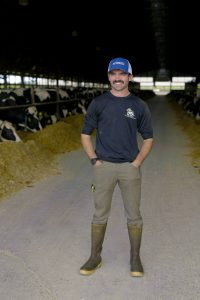
That mindset matters on a dairy milking 3,500 cows through a 72-stall rotary. Greater productivity doesn’t necessarily mean adding more cows, more people or more hours to the day. It means finding ways to get more value from the resources already there.
For Double Eagle, Afimilk technology is helping uncover those opportunities – from moving more cows through the parlor to identifying which cows are truly paying their way.
More Milk in Less Time
One of the clearest examples came after Double Eagle upgraded its Afimilk technology in 2025, adding new MPCs/milk meters and AfiCollar with the Feed Efficiency Service. Neyer began using Afimilk’s stimulation functionality, or StimiPulse, which adjusts pulsation according to milk flow. The impact showed up quickly.
Within about a week, Neyer says milking time dropped by 12 to 18 seconds per cow while milk production increased approximately 1.5 to 2 pounds per cow. “You do the math – that adds up over the course of a year,” he says.
But the impact wasn’t limited to individual cows. Increased parlor throughput helped Double Eagle grow from milking approximately 3,200 cows to 3,500 cows through the same parlor.
Looking Beyond Milk Production
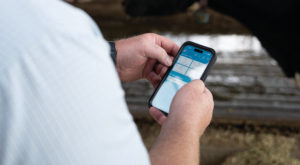
The same principle applies to the cows themselves. Milk production has traditionally been an obvious metric when deciding which cows should remain in the herd. But production alone doesn’t tell Neyer whether a cow is producing that milk efficiently. That’s where Afimilk’s Feed Efficiency Service is giving Double Eagle another layer of information.
Neyer says the data quickly began identifying potential cull cows that weren’t appearing on his traditional reports because their milk production remained above his normal threshold.
“If you were going off production, you wouldn’t take a second look at them because they’re milking enough,” he explains. “You think they’re paying their way, but then you actually go out and look at those cows and they’re eating you out of house and home.”
By looking at individual feed intake alongside production, Double Eagle can make more informed decisions about which cows leave the herd and when. The goal isn’t simply a herd of high-producing cows. It’s a herd of efficient, profitable cows.
Put Labor Where It Matters
Productivity also means making better use of people. Double Eagle uses Afimilk data and automation to narrow thousands of cows down to the animals that actually require attention. Sort gates help streamline breeding and health work, while customized reports help the team focus on meaningful changes instead of checking cows unnecessarily.
For example, Neyer worked with Afimilk support to refine health reports using rumination deviations over multiple days. The result was a more focused list that eliminated cows the team had been checking without a real reason. That philosophy extends to the dairy’s breeding workflow. Cows can be sorted as they leave the parlor, treated and returned to their group in less than 10 minutes—reducing time spent working cows in the pens and decreasing the number of employees needed for those tasks. Neyer says the consistency, timing and accuracy of the process have helped Double Eagle maintain a 32–33% pregnancy rate.
Overall, Neyer estimates the dairy is accomplishing the same—or more—cow work with about three fewer people, even while milking more cows. “Without Afimilk, I’d need more guys to do the things we’re accomplishing right now,” he says.
Find Problems Earlier
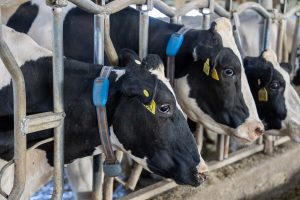
Efficiency can also mean avoiding a bigger problem tomorrow. After extending AfiCollar coverage to Double Eagle’s dry cow facility, the dairy began receiving real-time information on those animals. Neyer says the team has been able to identify sick cows earlier and also uncover inconsistencies in feeding times and feed push-ups that otherwise would have been difficult to see.
“In this market right now, two or three cows that we can save goes a long way,” he says.
The data also allows the team to evaluate management decisions at the group level. After doubling the number of fans in a barn that had struggled with heat stress, for example, Neyer could see in the data that it had gone from one of the farm’s poorest-performing barns for heat stress to one of its best.
Better Data. Smarter Decisions.
For Neyer, technology itself isn’t the end goal. Its value depends on what the dairy does with the information. “The information is only as good as how much you use it,” he says. “If you’re able to look at the data, you’re able to make a lot more informed decisions.” And that may be the simplest definition of productivity at Double Eagle.
It’s less time per cow in the parlor. More cows through the same facility. Fewer unnecessary cow checks. Better use of labor. Earlier intervention. And knowing which cows are converting expensive feed into profitable milk. Each improvement may begin with a different part of the operation, but they all lead toward the same goal: greater efficiency and greater opportunity for profitability.
As Neyer puts it, with more information at your disposal, “You’re able to make smarter decisions with it and waste less time.”