


Mastitis may be common in dairy herds, but delayed detection is what makes it costly – to the tune of $18-32B globally. If you want to detect mastitis early, the goal goes beyond identifying infection. You must identify it before milk loss spreads, the bulk tank is contaminated, and before fertility and culling risks increase.
Why Early Mastitis Detection Matters
A single infected cow can impact far more than her own production. When mastitis is detected too late, the consequences escalate quickly:
- Reduced milk yield
- Milk discarded due to contamination which can spread through milking equipment
- Decreased reproductive performance
- Increased culling risk
Early Signs of Mastitis
To detect mastitis early, it’s crucial to recognize the first measurable changes in a cow and her milk, which can include:
- Drop in Milk Yield. One of the earliest indicators is a sudden reduction in production from an individual cow.
- Increased Milk Conductivity. Inflammation in the udder changes the ionic balance of milk, increasing electrical conductivity. This often rises before visible clots appear.
- Changes in Milk Appearance. Clots, flakes or watery milk are later-stage signs, if you’re seeing that you’ve not caught mastitis early.
- Elevated Somatic Cell Count (SCC). High SCC confirms inflammation, but it often reflects infection already in progress.
- Behavioral Changes. Reduced rumination and altered eating patterns may occur as systemic inflammation increases.
The faster you detect mastitis, the faster you can isolate, diagnose and treat appropriately. Early mastitis detection protects production, profits and herd health. Here’s how to do it effectively. Yet visual observation alone rarely allows producers to detect mastitis early, especially in large herds.
How Technology Helps You Detect Mastitis Early
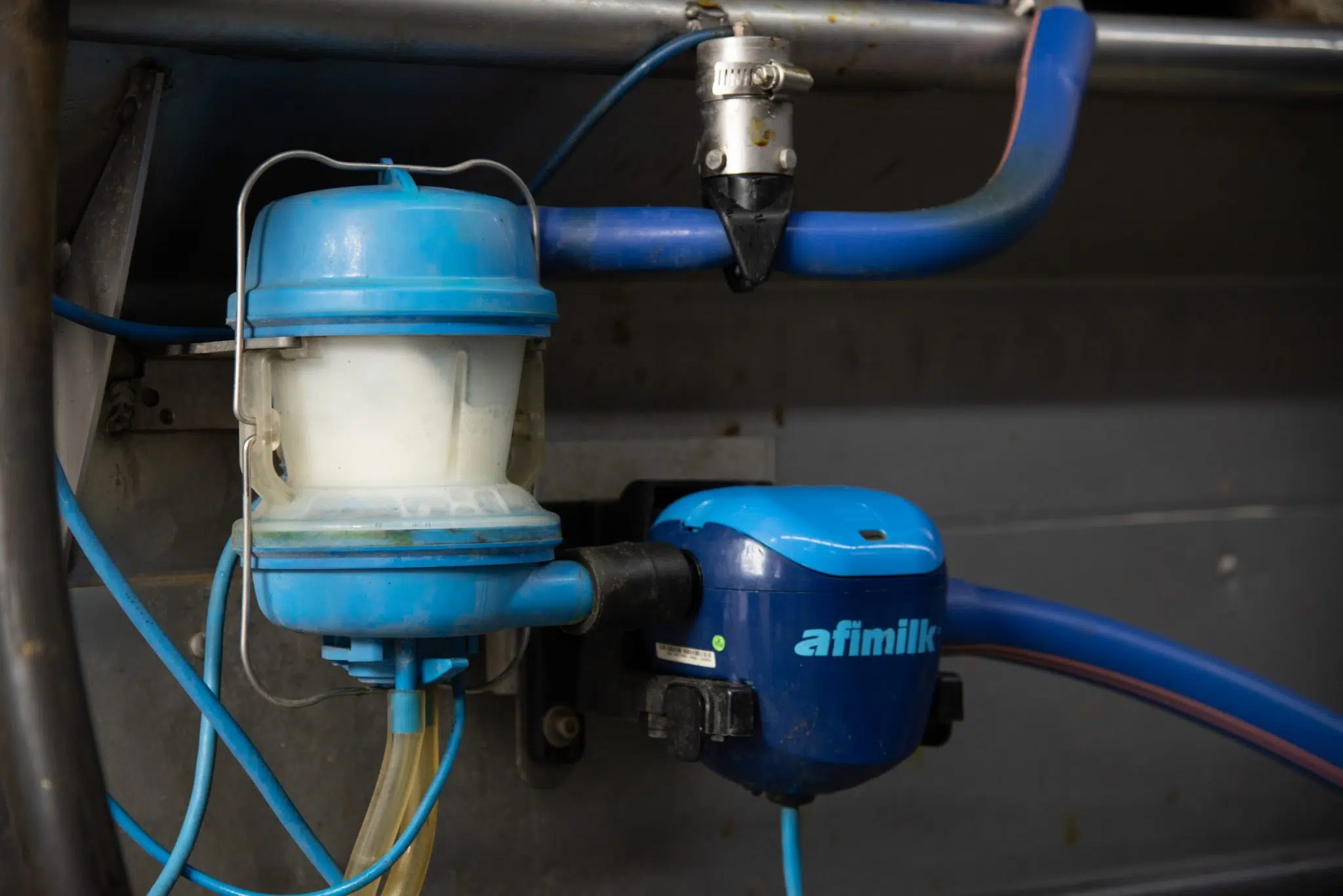
Modern dairy farms increasingly rely on automated systems to consistently detect mastitis early. Afimilk’s MPC and milk meter continuously measures:
- Milk yield
- Milk conductivity
- Additional milking parameters
Because conductivity increases as inflammation develops, the Afimilk system flags suspected mastitis cases during milking before outward symptoms become obvious. Every milking generates data, and all data flows into AfiFarm farm management software, where producers can:
- View real-time alerts
- Run health reports
- Identify trends across the herd
- Isolate infected cows immediately
That means early mastitis detection happens automatically, without relying on human observation alone. Early identification allows milk diversion before it contaminates the bulk tank, protecting both quality and revenue.
The Next Step: Identifying the Right Pathogen
Detecting mastitis early is step one. Treating correctly is step two, which requires producers to understand the bacteria they’re treating. Mastitis is typically caused by:
- Gram-positive bacteria (e.g., Staphylococcus, Streptococcus)
- Gram-negative bacteria (e.g., E. coli, Klebsiella)
Treatment effectiveness depends on identifying which group is involved. Using on-farm culture systems allows producers to:
- Identify gram-positive vs. gram-negative infections quickly
- Reduce unnecessary antibiotic use
- Apply targeted treatment strategies
- Improve recovery rates
Early detection combined with rapid pathogen identification dramatically improves treatment success.
Record-Keeping: The Overlooked Advantage in Early Mastitis Detection
To consistently detect mastitis early, farms must track trends, not just individual cases. Within AfiFarm, producers can:
- Log confirmed mastitis events
- Record diagnostic results
- Track treatments administered
- Monitor monthly mastitis incidence
Industry benchmarks suggest 2.5 cases per 100 cows per month is typical, but 3 or more cases per 100 cows per month indicates a potential herd health issue. Tracking trends over time helps farms identify:
- Recurring problem cows
- Seasonal patterns
- Milking protocol weaknesses
- Hygiene gaps
Early detection improves outcomes, but consistent data tracking improves prevention.
Why Automated Detection Outperforms Visual Checks
On a busy dairy farm, visual observation alone cannot reliably detect mastitis early in every cow. Automated milk monitoring systems:
- Evaluate every cow at every milking
- Detect subtle conductivity shifts
- Identify production drops immediately
- Generate alerts without human bias
Instead of reacting to visible symptoms, producers receive measurable data at the first sign of deviation.
Detect Mastitis Early to Protect Your Margins
Mastitis will likely always be part of dairy production, but late detection does not have to be. Farms that consistently detect mastitis early can reduce milk loss, improve treatment success, protect fertility and decrease culling rates.
By combining continuous milk monitoring through the MPC and milk meter, smart reporting in AfiFarm, and rapid on-farm diagnostics, producers can outsmart mastitis. Early detection isn’t just good herd management, it’s good business.