


For Dan Keller, technology isn’t about replacing good cow people. It’s about giving them the information and automation to make better decisions, act sooner and get more from every cow.
Keller Farms has changed considerably during its 90-year history. While the dairy grew from 300 cows to 1,100 during Dan’s tenure, he’s clear that his vision for the future isn’t another dramatic expansion. “We don’t intend to have 5,000 cows down the road,” he said. “We want to get better at what we’re doing instead of getting bigger.”
That philosophy has shaped the way the Keller family approaches nearly every part of the dairy. Dan and his wife, Heidi, focus on herd health and transition cows. His father, Luke, handles commodities, and his son, Aaron, manages day-to-day work, calves and crop production.
Together, the family farms about 1,750 acres, and harvests its own forage. For a family that wants to remain hands-on, efficiency isn’t simply about reducing costs. It’s about making sure their people, facilities and cows are being used as effectively as possible.
From More Data to a Better View of Each Cow
When the family built its current dairy facility in 2011, they focused on improving cow comfort, creating a better milking environment and collecting daily information on individual cows.
“At the old facility, there was no technology in the parlor,” Dan said. With the original Afimilk system, Dan gained daily milk weights and activity data with pedometers. Over time, they added more pieces of the solution, including AfiLab milk analysis, AfiCollar, automated sorting and, most recently, the Feed Efficiency Service. The entire package is what’s referred to as the Full Afi solution.
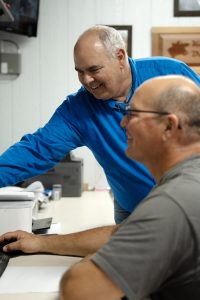
Data from those individual technologies are analyzed in AfiFarm, connecting data on production, health, reproduction, feed intake and milking performance. For Dan, that connected view changes the way a day begins. His first stop is a report showing the cows that need to be bred, followed by the day’s task list. From there he can review production, identify cows that have unexpectedly dropped in milk and determine which animals may require a closer look.\
The value is not simply having more information. It is narrowing 1,100 cows down to the ones that actually need his attention. “It allows me to not have to go look at every cow,” Dan said.
Connecting Health, Reproduction and Labor
At Keller Farms, transition cow management has changed considerably with the adoption of full Afi. The milk component and cow trend data collected by AfiLab is used to identify fresh cows showing concerning changes in production or fat-to-protein ratios so they can intervene sooner.
Dan estimates, “the approach has contributed to roughly a 50% reduction in displaced abomasum cases” as the team has been able to identify and treat problem cows before their condition progresses.
The system also changes the amount of labor required to find those cows. “We don’t have to go chase all those cows and temp and keto-check all those cows,” Dan said. “Now we can look at the data and just go find the ones we need.”
He estimates they may have only half as many cows to physically check as they once did. When an animal does need attention, the sort gate can automatically separate her. “The cows come to us. We don’t have to go to the cows.”
The same connected approach enables a reproductive program that produces results so significant they were recognized for Excellence in Dairy Reproduction by the Dairy Cattle Reproduction Council (DCRC) in 2024. “We’ve been averaging around a 60% conception rate and a 40–42% pregnancy rate.”
Dan is quick to point out that technology doesn’t deserve all the credit. He repeatedly comes back to forage quality, cow comfort, nutrition and the skill of the breeder. Technology’s role is consistency. Protocols and task management help ensure cows get the right shot and are bred when they are supposed to be bred.
“There’s basically no cow slipping between the seams.”
“We’ve been averaging around a 60% conception rate and a 40–42% pregnancy rate.”
When the Parlor Becomes Part of the Management System
Full-farm automation also allows the Kellers to look beyond the cows and evaluate the processes around the herd.
When the farm began experiencing teat-end concerns, the team used Afimilk milk letdown reports to investigate what was happening in the parlor. The data showed units were sometimes being attached before cows were ready for milk letdown.
They changed the milking protocol, monitored the results and refined it again. Later, cameras and employee training helped reinforce the new procedure and explain not just what employees should do, but why it mattered.
A Future Herd Based on Efficiency
The newest layer of technology is giving Keller Farms an added dimension when assessing what makes a good cow. With the barn full, Dan needed to identify animals that could leave the herd before summer without sacrificing overall performance.
The AfiCollar Feed Efficiency Service combines individual dry matter intake measured through AfiCollar with milk production data to calculate feed efficiency and income over feed costs (IOFC) for each cow. That insight allows Dan to identify the most feed-efficient and profitable cows to make more informed culling decisions.
That data is beginning to influence breeding as well. Keller Farms uses sexed semen strategically on its best animals while lower-efficiency cows can be bred to beef. “The most productive, most efficient cow – that is the one that we want to breed to sexed semen,” Dan said.
The family has also begun genomic testing, opening another opportunity to compare predicted genetic potential with the actual performance data Afimilk is collecting on cows in the herd. It’s a fitting direction for a dairy already thinking about the next generation. Dan’s son appears likely to continue farming, and two young grandchildren may represent another generation behind him.
Technology That Helps Good Cow People Do More
Dan doesn’t view automation as a substitute for experience. If anything, Keller Farms demonstrates the opposite. Good forage still matters. Cow comfort matters. The nutritionist, breeder, employees, veterinarian and family all matter. Technology helps those people know where to focus.
Asked what he would do if all of the farm’s technology disappeared tomorrow, Dan didn’t hesitate. “Find more technology.”
That answer says a lot about how full-farm automation has shaped operations at Keller Farms. It’s part of how the family manages cows, employees, breeding, health, feeding and the parlor as one operation.
As costs continue to rise, Dan believes dairies ultimately face a choice. “You either get bigger or you get better,” he said. “For us, bigger wasn’t where we wanted to be as a family, as an operation.” So, Keller Farms is choosing better – and using technology to help get there.
Keller Farms at-a-Glance
- Fort Recovery, Ohio
- Herd Size: 1,100 cows
- Afimilk Products: AfiCollar, AfiFarm Software, Afi2Go, Afimilk MPC/milk meters, AfiLab, AfiCollar Feed Efficiency Service
Related content
 Cow Monitoring
What’s a Cow Monitoring System and Why AfiCollar Sets the Standard
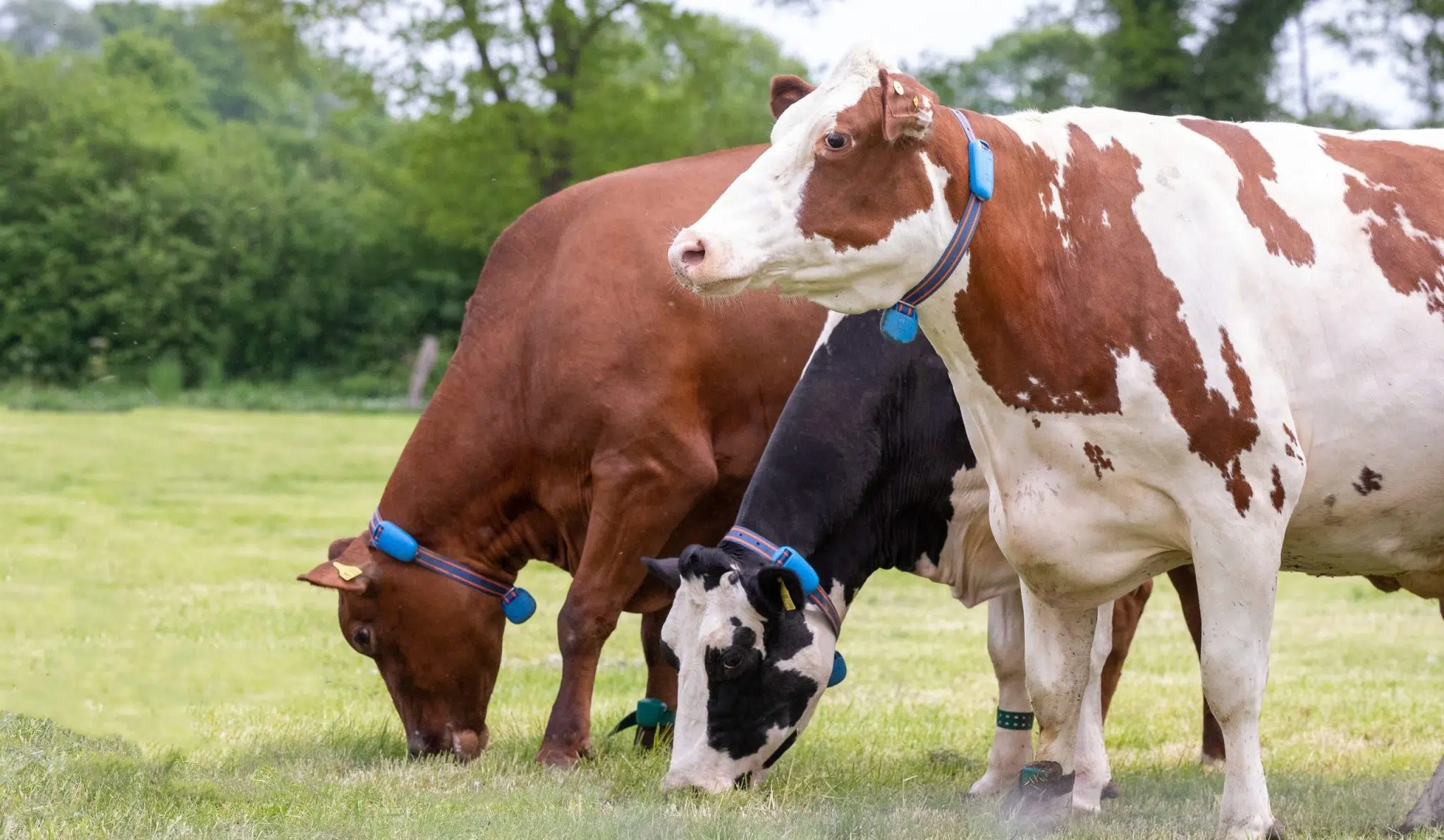
A cow monitoring system is a technology platform designed to continuously track individual cow behavior and turn that information into actionable herd management insights. Instead of relying solely on visual observation, producers can use real-time behavioral data to guide reproduction, health, welfare and feeding decisions. Modern systems typically track key activity metrics such as rumination, […]
Read More Case Study
For Lash Legacy Dairy, the Tech Was Important, But the Support Was Everything
Before committing to something new, Whitby recommends asking one question: Who shows up when something goes wrong? For Kaleb Whitby, at Lash Legacy Dairy in Mabton, Washington, managing 4500 cows requires more than just hard work – it demands a trusted network. A relative newcomer to the industry, it didn’t take Whitby long to learn […]
Read More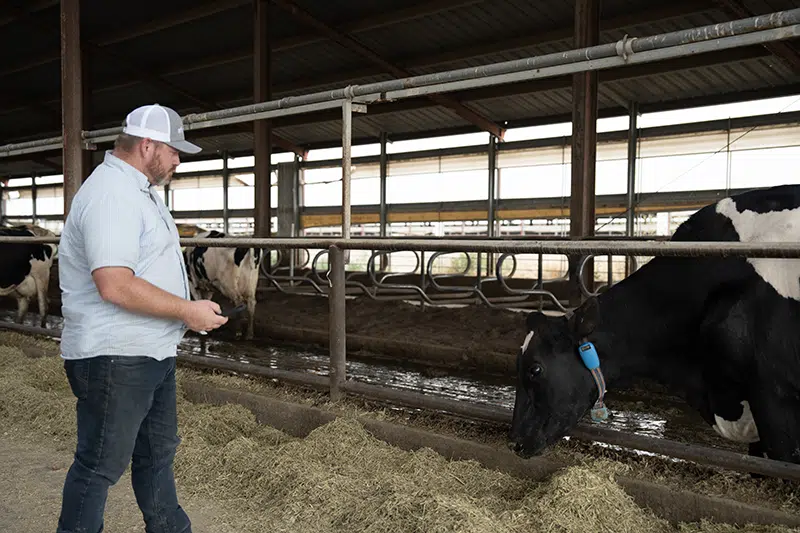 Case Study
Lash Legacy Uses AfiCollar to Streamline Processes, Support Herd Health
Balancing Cow Comfort and Labor Efficiency In central Washington, Kaleb Whitby manages Lash Legacy Dairy, a 4,500 cow operation focused on finding practical ways to use technology to multiply the effectiveness of his team while maintaining strong cow performance. With no headlocks on the farm, Kaleb is focused on minimizing labor-intensive processes while also keeping […]
Read More